Texas · oil
The oil they left behind
Texas has 150,000 idle oil wells and a new law to plug them with cement. Before that happens, I taught a machine to read their old paper records and look for what was missed.
By Igor · November 2026
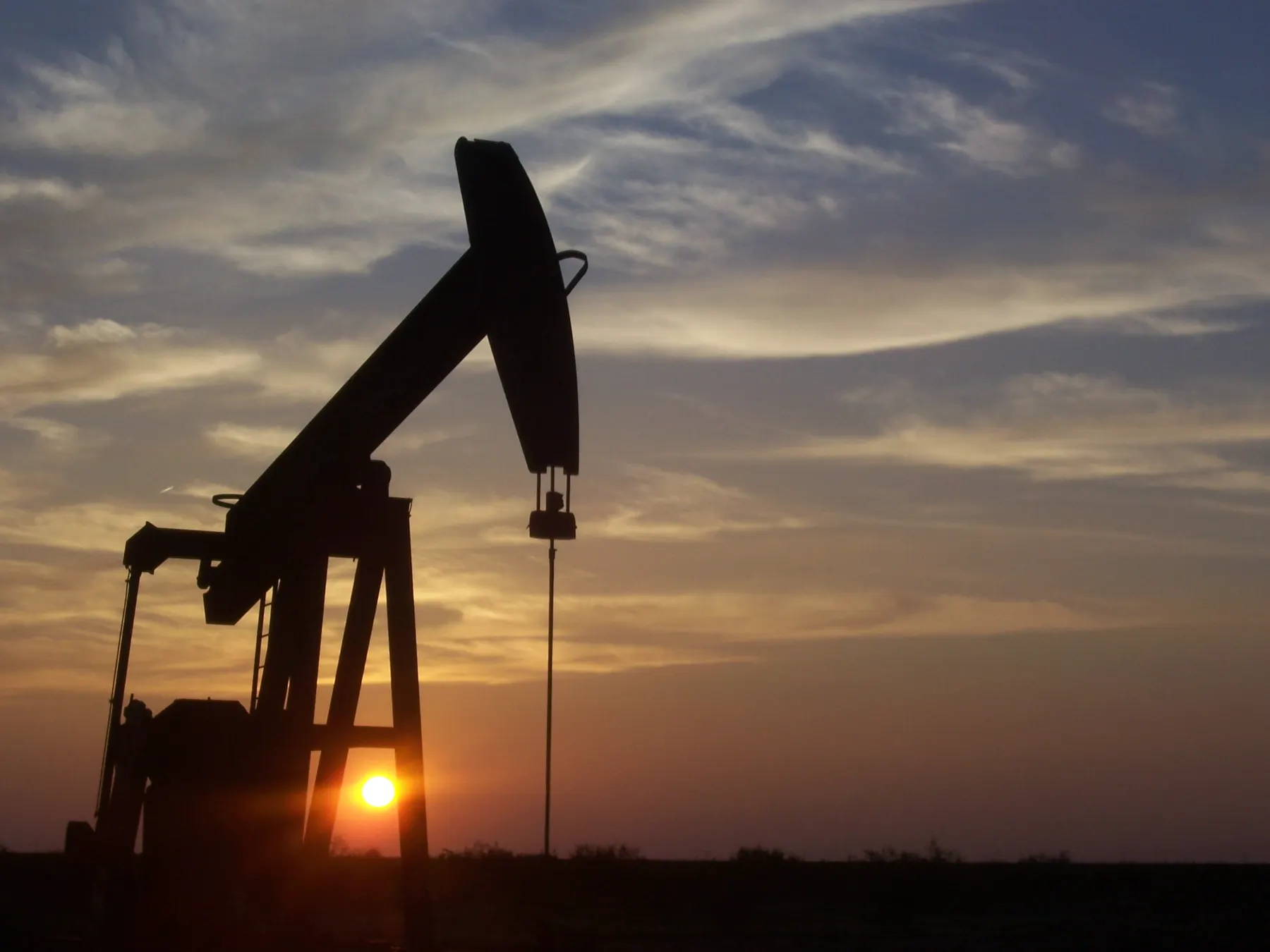
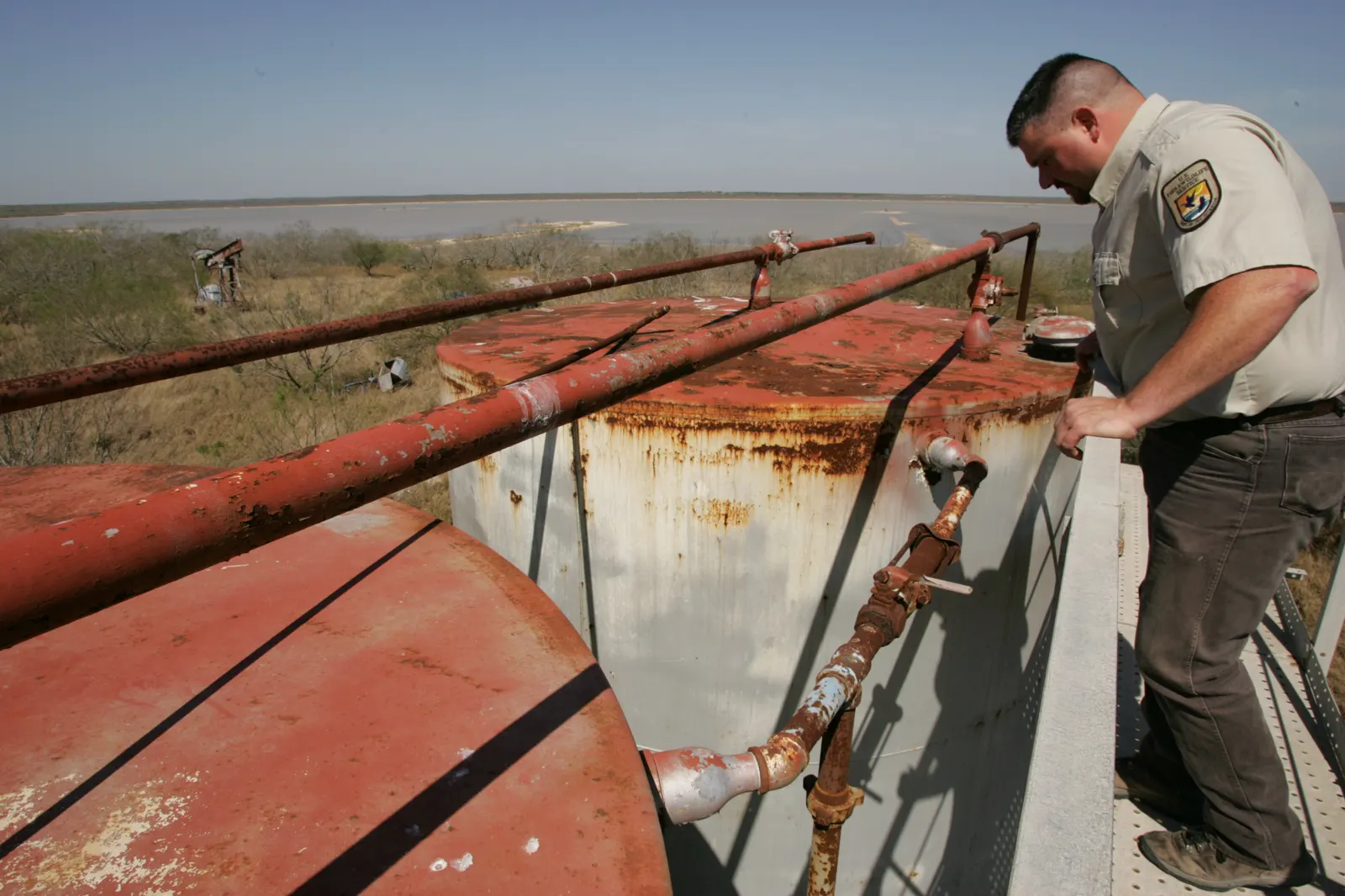
East of Austin the pumps stand in cattle pasture and at the edge of small towns. Some nod up and down. Most do not move at all. A well that has stopped is easy to mistake for scrap metal.
An oil region is worked in rounds. First come the giants, companies like Shell or Chevron, and drain the big reservoirs. When those run low, mid-sized companies move in for the medium ones. What is left after them is small pockets of oil. They are worked by small firms, sometimes by one person with a few pumps, and for them every new attempt is a big bet.
After a century and a half of this, several million wells have been drilled in the United States and Canada.
Texas has more than 150,000 oil and gas wells that produce nothing. In 2025 the state passed a law: a well that has been idle for 15 years must be plugged with cement, unless its owner has an approved plan for it. Enforcement starts in September 2027.
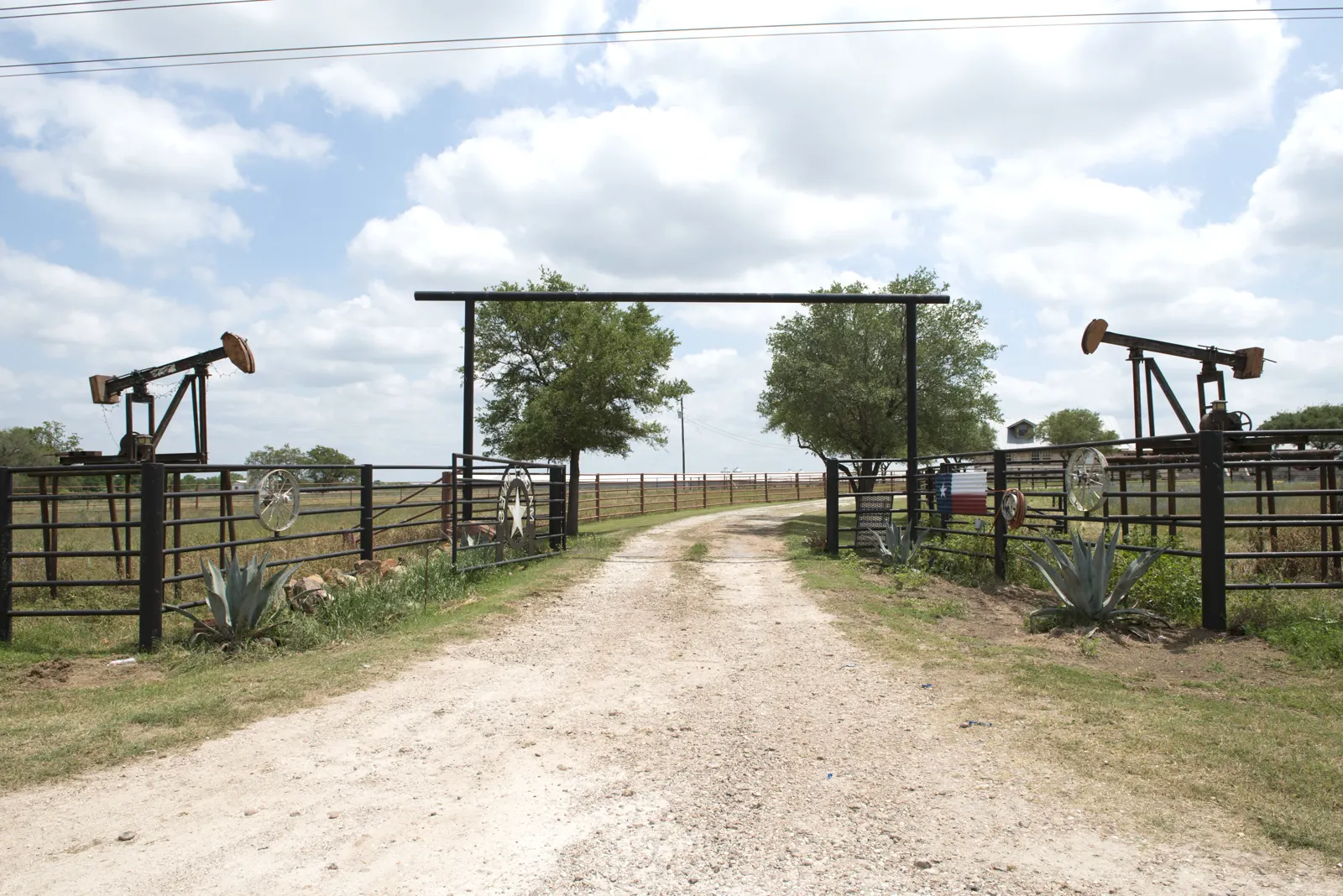
A plug is not the end of a well. It can be drilled out later and the well opened again. But plugging costs money, about $30,000 a well on average by the state’s own count, and drilling the plug out costs money again. (source)
So before the cement goes in, each of those wells carries a question: is there anything down there worth going back for?
Every well keeps a diary
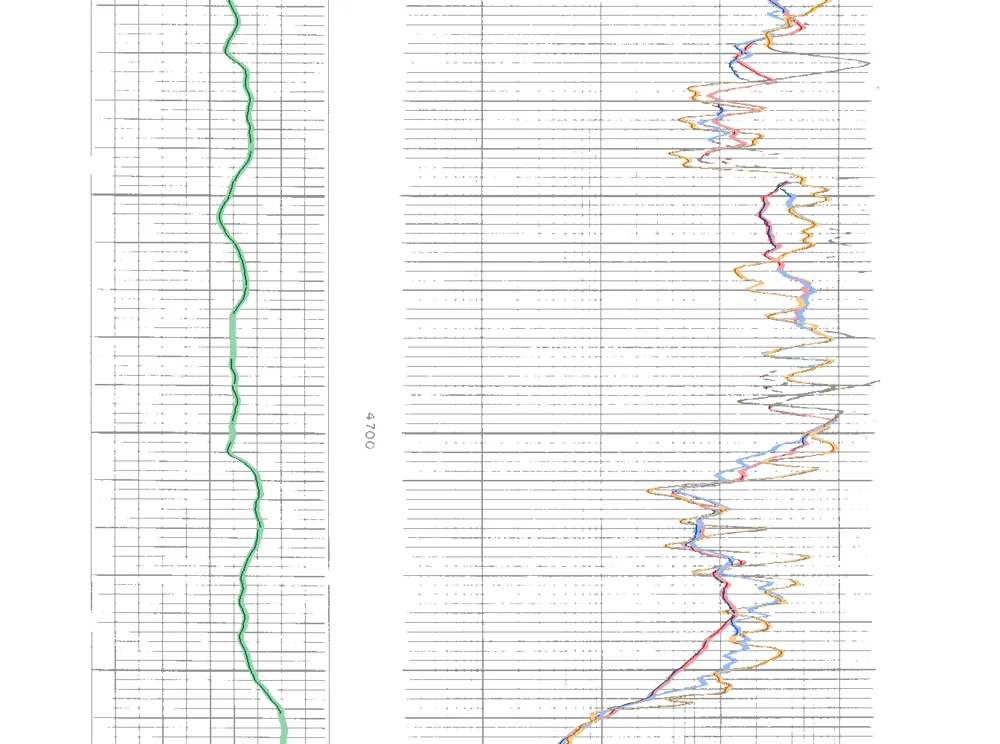
When a well is drilled, instruments are lowered into the hole and draw wiggly lines on a long strip of paper. One line shows the kind of rock. Another shows how easily electricity passes through it.
Salt water carries electricity well. Oil does not. That strip is called a well log.
By law the logs are handed to the state and become public records, and Texas has been collecting them for a hundred years. Many can be found online. Many others cannot: they have to be bought from companies that trade in them, or dug out of local log libraries. Most exist only as scans of paper.
Read one yourself
There are three sandy layers here. Only one shows signs of oil. Tap the layer you would go back for.
Hint: sand is where the left line swings to the left.Clay. Nothing moves through clay. Try a layer where the left line swings left.Sand, but electricity runs through it easily. That is salt water.Sand again, and again it conducts. More salt water.Yes. Sand that resists electricity: something other than water is sitting in it. A geologist would circle this.
Now do that 18,500 times
Reading one log properly, checking the neighbouring wells and the paperwork, takes a geologist from half a day to a full day. The three counties I started with have about 18,500 wells.
So I built a geologist
It starts where a person would: with the paper. A neural network follows every inked line on the scan and turns it back into numbers.
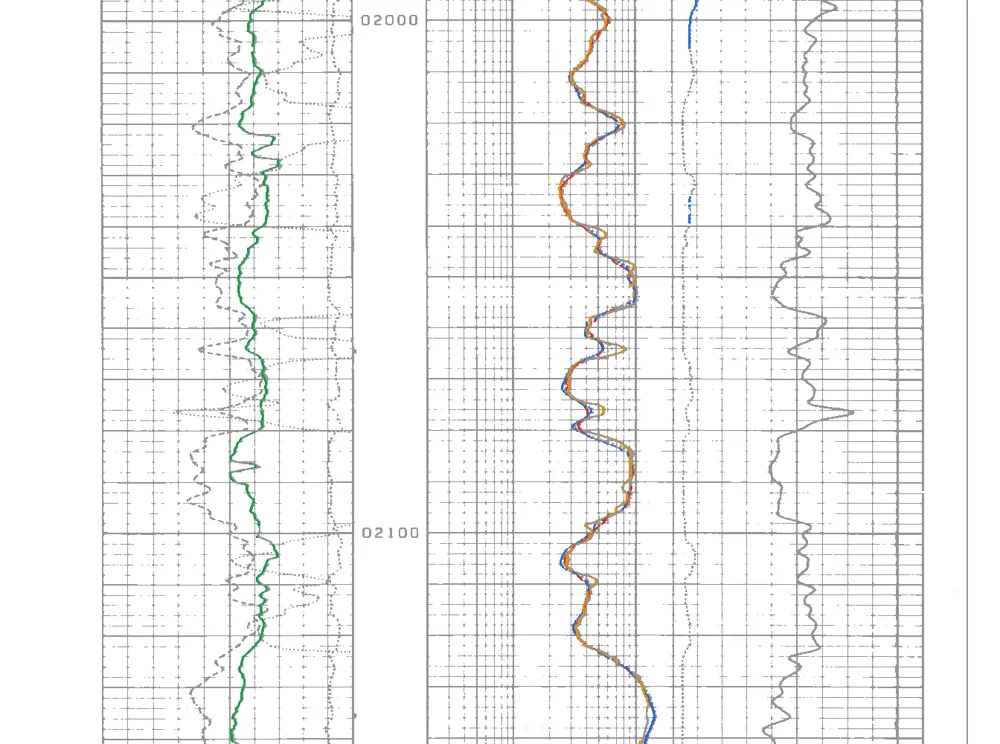
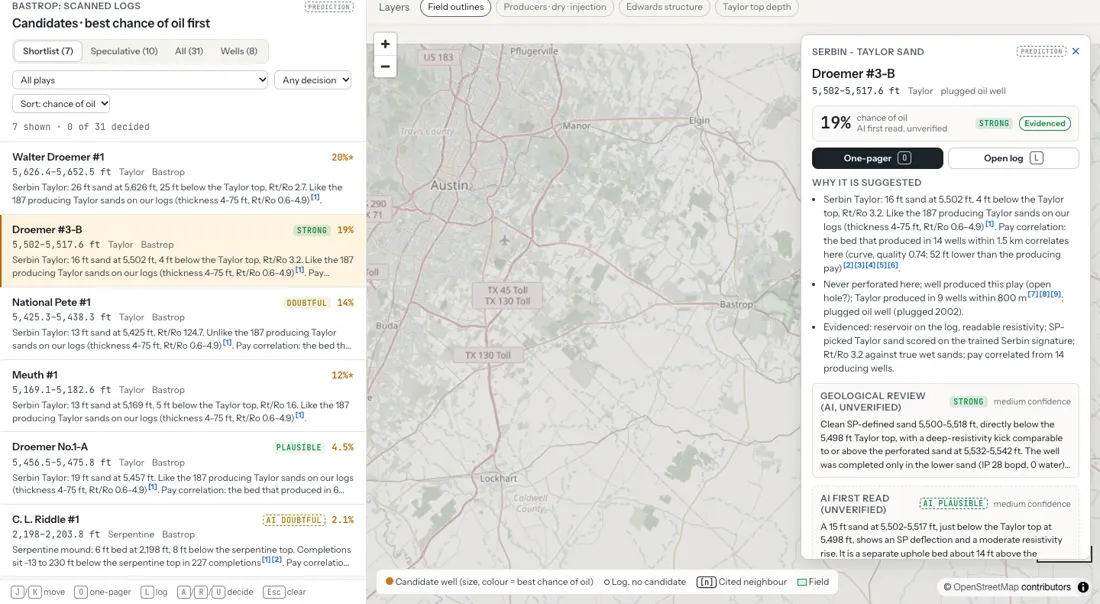
Then it compares each layer with nearby wells that did produce oil, and marks the layers that look as if they were passed over. Each suggestion comes with its reasons.
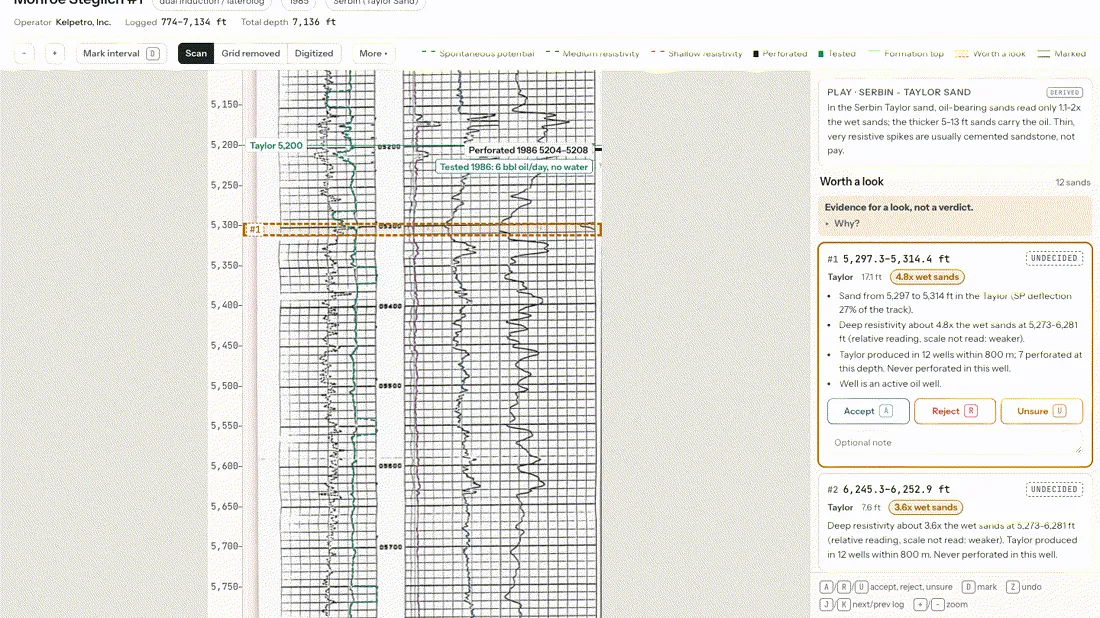
After that, an AI model reads every suggestion the way a sceptical colleague would and writes down what could be wrong with it. A human geologist makes the final call.
That is the whole point. Not an answer: a short list of where a geologist should look first.
Does it find real oil?
I cannot drill a well to check. So I ran a test. I took 322 layers that are known to have produced oil, hid that fact from the system, and asked it to search. It found 212 of them, about two in three.
What it is not
Nobody has drilled on its advice. The honest finding so far is that truly convincing candidates are few, and the AI tends to be a little more hopeful than a careful review.
It is a way to decide where a geologist should spend tomorrow morning. Nothing more.
See it for yourself
The prototype is open. Pick one of the three counties, click a well and read its one-page case.
 Open the prototype →
Photographs: Eric Kounce (opening picture); Carol M. Highsmith, Library of Congress (ranch entrance); Steve Hillebrand, U.S. Fish and Wildlife Service (abandoned well). All public domain, via Wikimedia Commons. Well logs: U.S. Geological Survey and the Railroad Commission of Texas. Numbers as of 22 October 2026.